Building the tooling. Building the communities. Since SMS 2.0.
PowerStacks was founded by long-tenured Microsoft systems-management veterans. The people behind the product have been shipping into this space since the mailing-list era, and we built PowerStacks because we were the customer of our own problem first.
Why PowerStacks exists
A moment at MMS that took ten years to ship
Years ago, John Marcum was doing a session at the Microsoft Management Summit with Wally Mead, Microsoft's long-time Principal PM for Configuration Manager. John was an SCCM admin at the time. He spent roughly 70% of his working hours building custom reports against the ConfigMgr database for management requests that the canned reports couldn't answer.
On a whim, he polled the audience: "Who here creates custom reports against SCCM data to answer real business questions?"
Not a single hand went up.
When he asked why, the answer from the room was unanimous: reporting on this data was too hard, and most SCCM admins didn't know SQL well enough to do it. Everyone wanted the reports. Almost nobody had the tooling to build them.
John decided right there to build the product that would close that gap. It took ten years to find someone who could actually build it with him.
That someone was Julien. They started in 2018 under Julien's fatstacks.tech brand, shipped BI for SCCM, then BI for Intune, then BI for Defender. When the business became profitable they spun the BI products into a separate company (PowerStacks) for accounting clarity. The product John polled the room about at MMS years earlier was finally in customers' hands.
The team
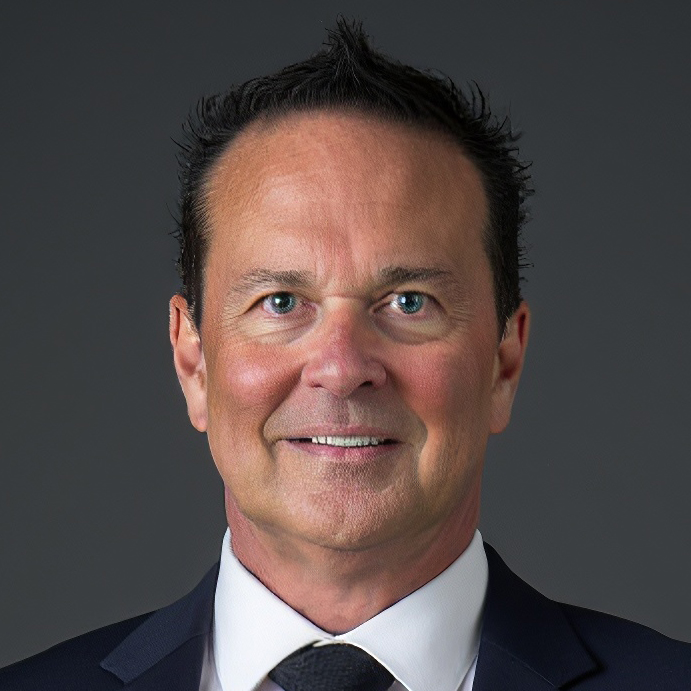
John Marcum
Co-founder · Program Manager, BI Products
John is a 16-time Microsoft MVP, recognized across Configuration Manager, Enterprise Mobility, Intune, and finishing as a Windows 365 / Cloud PC MVP. Beyond the MVP record itself, he's been continuously shipping into Microsoft's endpoint-management world since the SMS 2.0 mailing-list era at MyITForum. His career has paralleled the platform itself: SMS 2.0 helpdesk and admin work in the early 2000s; SMS / SCCM architect roles at BE&K (3,000 clients, SCCM 2007 across central + child primary + 16 secondary sites) and HealthSouth (20,000 clients, SCCM 2007 → 2012 migration); senior desktop architect at a Birmingham law firm running a $12M centralization and modernization project (where he implemented a self-service application portal a decade before App Store for Intune existed as a product); managing consultant at CTGlobal Services; and senior consultant / solution owner for Modern Workplace at New Signature.
Along the way: he authored the first training material for SCCM 2007. He authored the first training material for Intune, co-presented as a pre-conference at MMS one year with fellow MVP Peter Daalmans. (It was offered once.) He assisted with the formation of the American arm of the Swedish security firm TrueSec in Birmingham, Alabama, providing consulting services and presenting trainings under Johan Arwidmark's deployment expertise.
Julien Moreau
Co-founder · Engineering & Infrastructure
Julien has spent more than twenty years on the same hard problem: turning messy enterprise inventory data into something you can actually trust. The product names changed across three companies; the specialty didn't.
He started at PS'Soft in France in 2003, then moved to the company's San Mateo office, building the Software Library, an IT-inventory and license-compliance product line covering SCCM, asset tracking, and service management. PS'Soft was acquired by BDNA in 2008, and Julien stayed on through the integration.
At BDNA, Julien imagined, designed, and built BDNA Normalize, the data platform that processed billions of raw customer rows from SCCM, ServiceNow, HP, BMC, IBM BigFix, Symantec, Tanium, and forty-plus other inventory sources, and produced a clean, canonical software catalog with greater than 96 percent out-of-the-box mapping fidelity. He defined the extraction layer for every major endpoint management platform. He also drove BDNA's pivot to a data-first strategy as Director of Product Management; under that roadmap, the new product lines reached roughly 90 percent of company revenue with the company growing 40 percent year over year. Normalize itself won the ABA Gold Award in 2016 for Best New Product of the Year in the Asset Management Solution category.
Marquee customers he led product for at BDNA include Texas Health Resources, Kaiser Permanente, Wells Fargo, JPMorgan Chase, Citi, Verizon, AstraZeneca, and Ernst & Young.
BDNA was acquired by Flexera in 2018. When Julien left in that transition, John reached out about building a different kind of SCCM tool together. The answer was yes, and the data-modeling discipline behind BDNA Normalize is the same discipline that powers PowerStacks's BI for Intune, BI for SCCM, and BI for Defender today.
He now runs engineering for PowerStacks, owning the build pipelines for the BI for Intune, BI for SCCM, and BI for Defender Power BI templates, and the deployment automation that lands App Store for Intune inside customer Azure tenants.
Why this matters for the product
Twenty-seven years in the same community
What follows isn't a resume. It's the work that taught us what good systems-management tooling looks like, and the source material PowerStacks is built from.
Mailing lists and forums (where it all started)
Active on the MyITForum mailing list from the SMS 2.0 days. Rod Trent's community effectively became the precursor to MMS and the modern ConfigMgr/Intune community structures. Later, a long-running technical blog at systemcenteradmin.com, and ongoing moderator service on the official Microsoft TechNet forums.
Microsoft Management Summit (and its community-run successor)
MMS started life as a conference for Altiris, with Microsoft as an exhibitor. Microsoft eventually took it over and rebranded it as the Microsoft Management Summit. John first attended in 2007 and started presenting in 2009.
When Microsoft eventually wound down the conference, fellow MVPs Brian Mason and Greg Ramsey revived it as the community-run Midwest Management Summit (MMSMOA), and John kept presenting. Across both eras of the conference he was on the agenda from 2009 through 2022, with only the COVID-disrupted years pausing the run. Two eras of the same conference, two eras of contributing back.
Conference speaking (the rest)
Beyond MMS and MMSMOA: TechEd speaker and on-staff volunteer in 2009 and 2014. IT/Dev Connections speaker in 2015 and 2016. The MMS Intune pre-conference noted above, co-presented with Peter Daalmans. Plus a long tail of user-group talks across the Microsoft systems-management community. He now attends as a participant rather than a speaker.
Microsoft MVP Summit
Years of attending the annual Microsoft MVP Summit in Redmond. The MVP Summit is the closed-door event where MVPs sit with the Microsoft product groups, see what's coming next, and give direct feedback on the roadmap. The chance to shape the direction of Microsoft's systems-management stack from the inside is one of the parts of the MVP program that mattered most to John, and a lot of what he learned in those rooms made its way back to the broader community through the conferences, the blogs, and the products he's built since.
Reddit communities (founded, scaled, handed off)
Founding moderator of r/Intune. Founder of r/PSADT, r/Windows365, and r/DefenderATP. Each was handed off to active moderators as the communities outgrew solo-moderator capacity. Building them was the contribution, and stepping back when the right people could carry them was the right call.
Tooling that the wider community uses
The first training material for SCCM 2007. The first training material for Intune. The Right Click Tools port to the modern SCCM console (later commercialized by Recast Software). The warranty-data-in-SCCM-hardware-inventory pattern that Sherry Kissinger and John published, which became a community standard. That depth of community work shapes how PowerStacks products are designed and built.
The case for tenant-local, told differently
Most third-party endpoint-management vendors ship a SaaS product. They get to write marketing about how they protect your data on their infrastructure. Their pitch lives or dies on whether you trust their cloud.
PowerStacks deploys into your Azure tenant: App Store as an App Service in your subscription, the BI products as template apps in your Power BI workspace. We never see your data, never hold your credentials, never sit between you and Microsoft Graph.
This is a deliberate design choice. PowerStacks does not build products that require customers to grant a vendor that level of access to their tenant.
PowerStacks builds products its own team would deploy. App Store for Intune was built to deliver self-service apps and patching entirely inside the customer's tenant.
Get the products built by people who built the community
BI for Intune, BI for SCCM, BI for Defender, and App Store for Intune, all running entirely in your Azure tenant.